
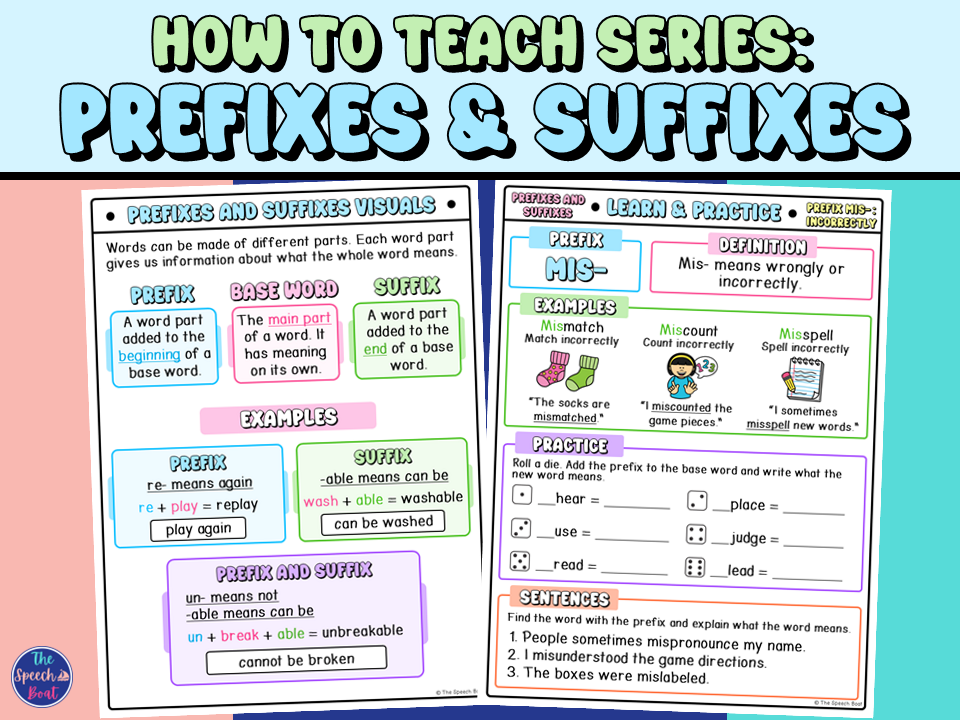
When prefixes or suffixes are added to a base or root word, they can change the meaning of that word. Students can learn the meanings […]
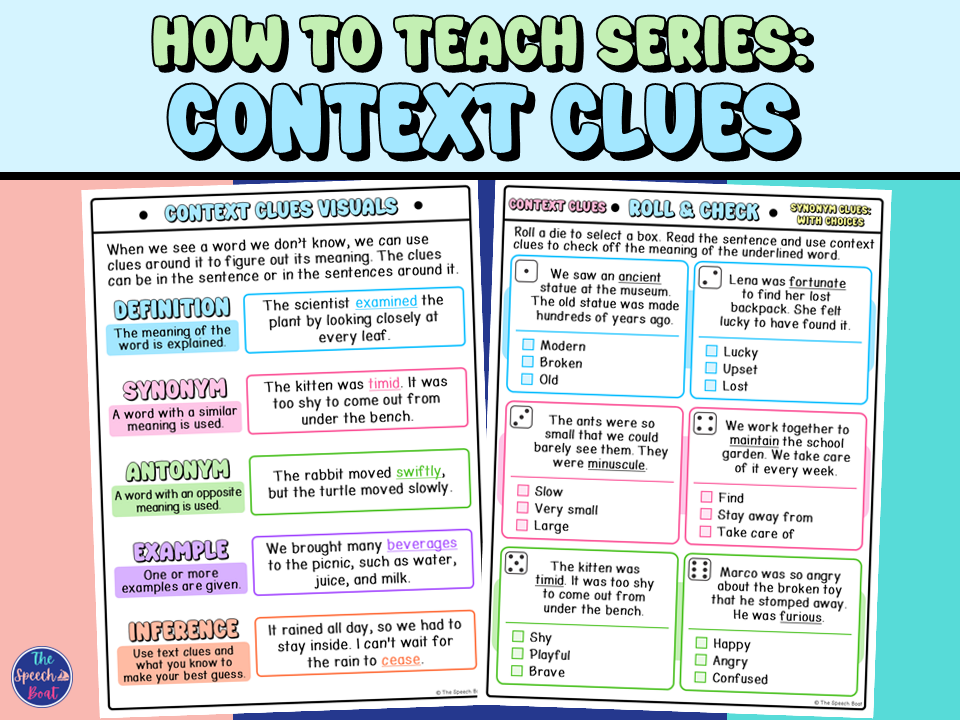
How To Teach Context Clues in Speech Therapy
When we encounter a word we don’t know, we can use context clues to figure out the meaning. Children with smaller vocabularies benefit from explicitly […]
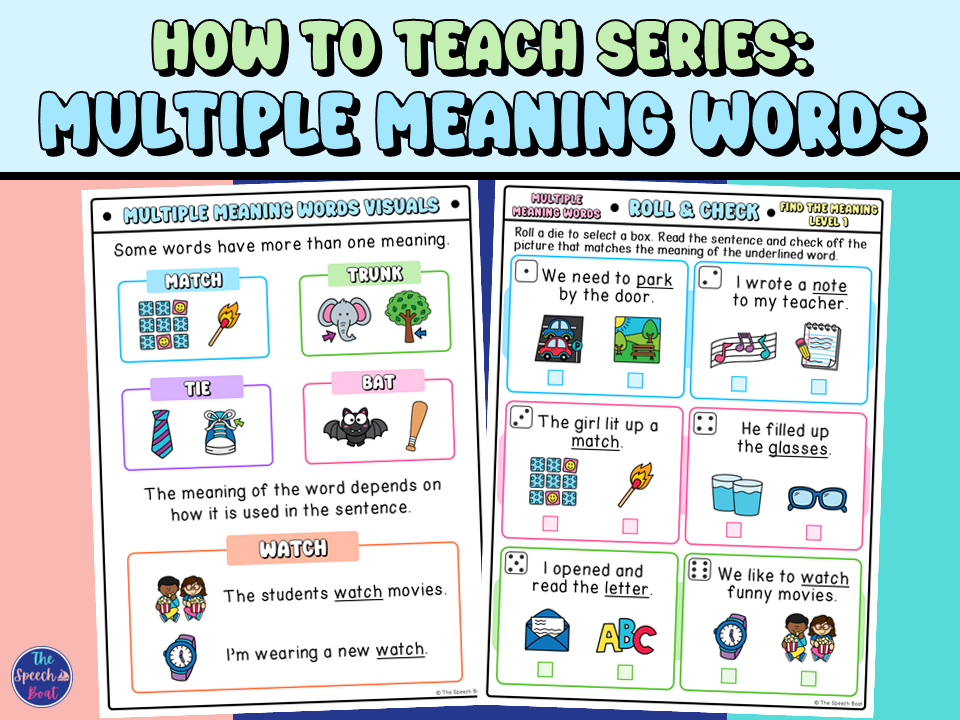
How To Teach Multiple Meaning Words in Speech Therapy
Words that have more than one meaning can change the meaning of a sentence and affect understanding. Students need to understand that some words have […]
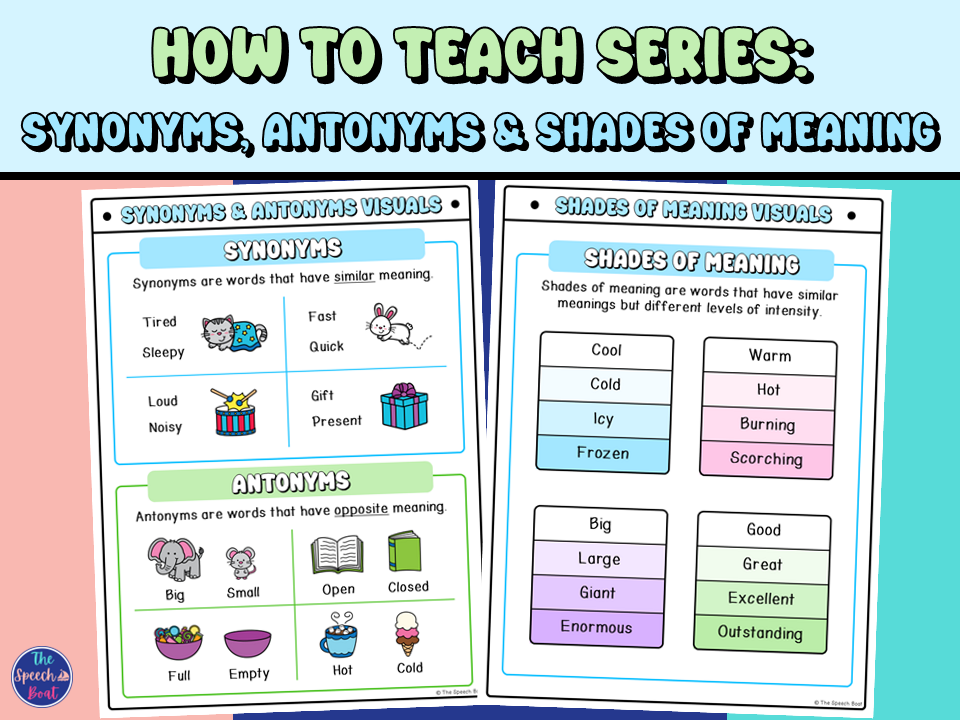
How To Teach Synonyms, Antonyms, and Shades of Meaning in Speech Therapy
You’ve probably encountered speech therapy goals that include synonyms and antonyms, and maybe also shades of meaning to support vocabulary development. But, how do you […]
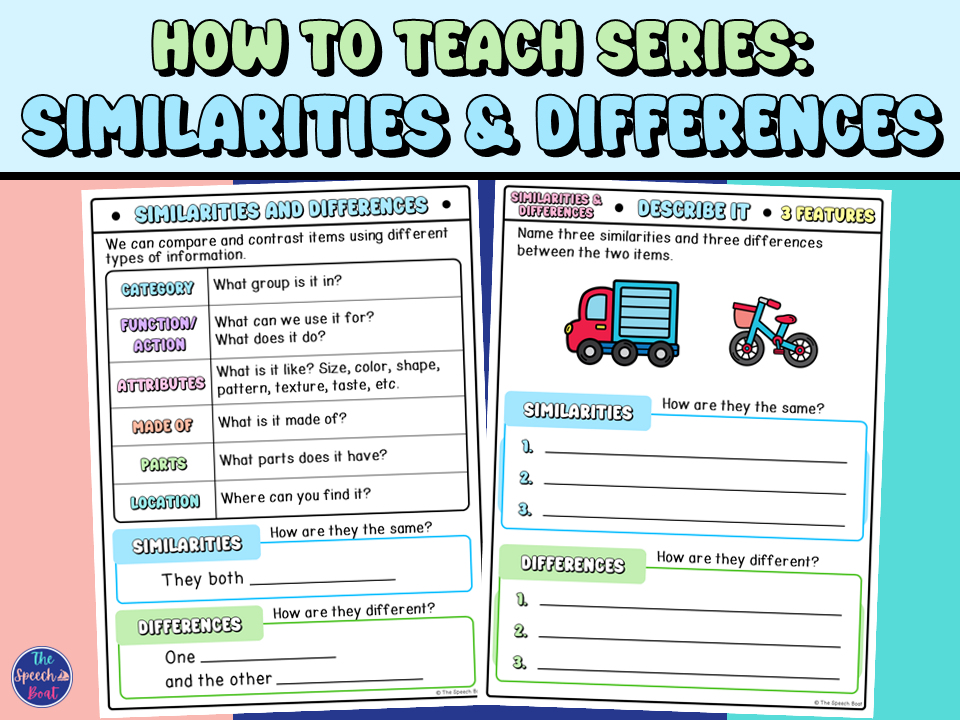
How To Teach Similarities and Differences in Speech Therapy
Being able to compare and contrast helps students build vocabulary skills. So, how do you teach similarities and differences in speech therapy? Let’s dive in! […]
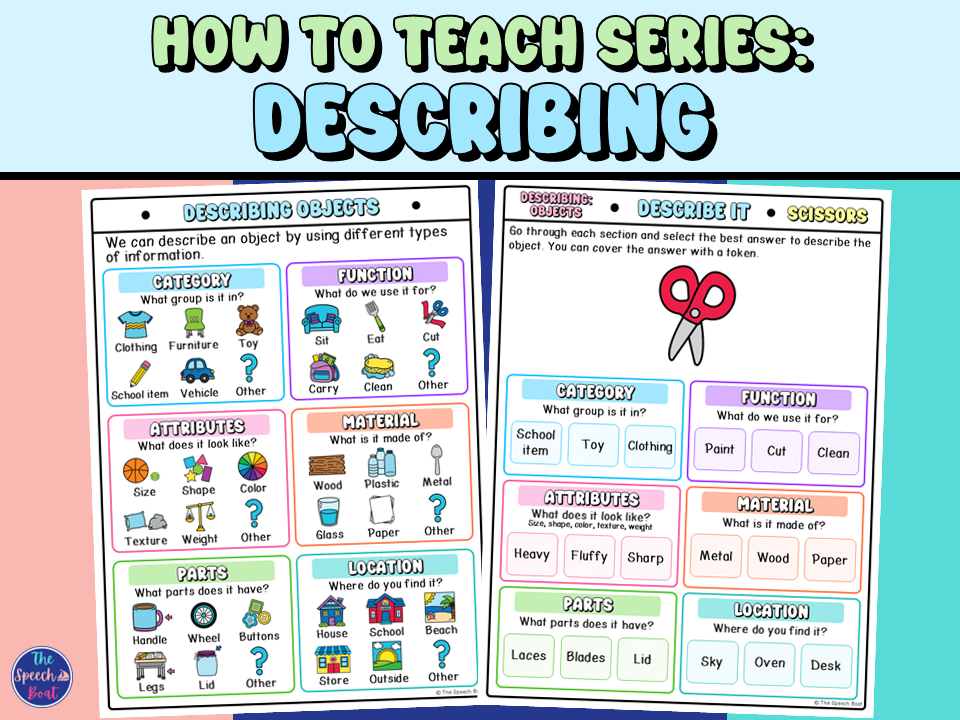
How To Teach Describing in Speech Therapy
Describing is an important part of vocabulary intervention. Strong describing skills help students recall information and learn new words more easily. So, how do you […]
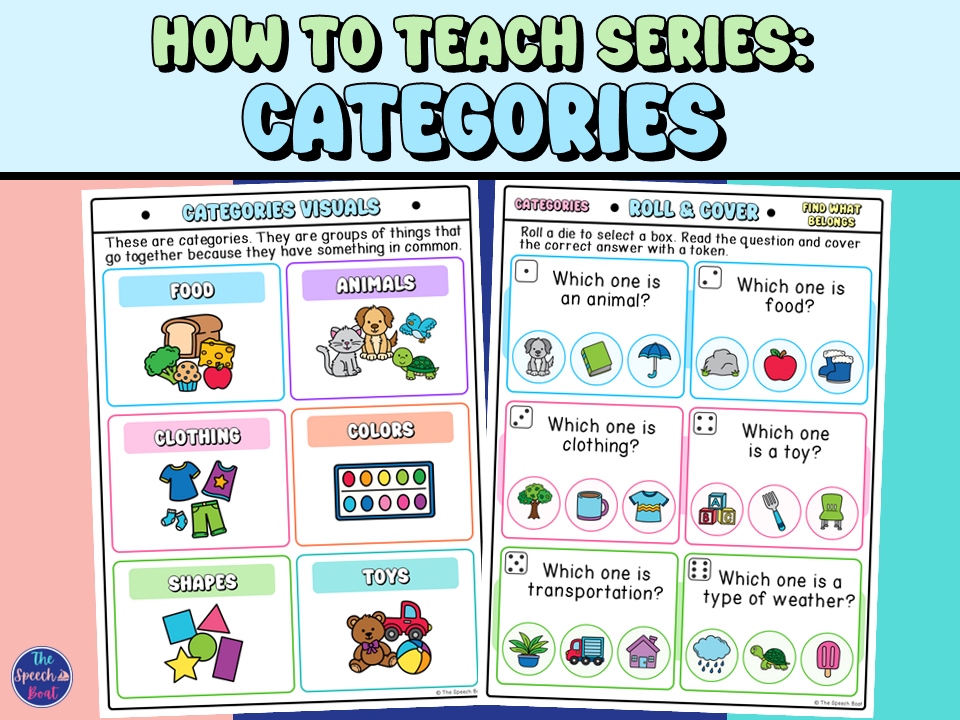
How To Teach Categories in Speech Therapy
Categories are an important part of vocabulary development. They help build stronger connections between words children already know and make it easier to understand and […]
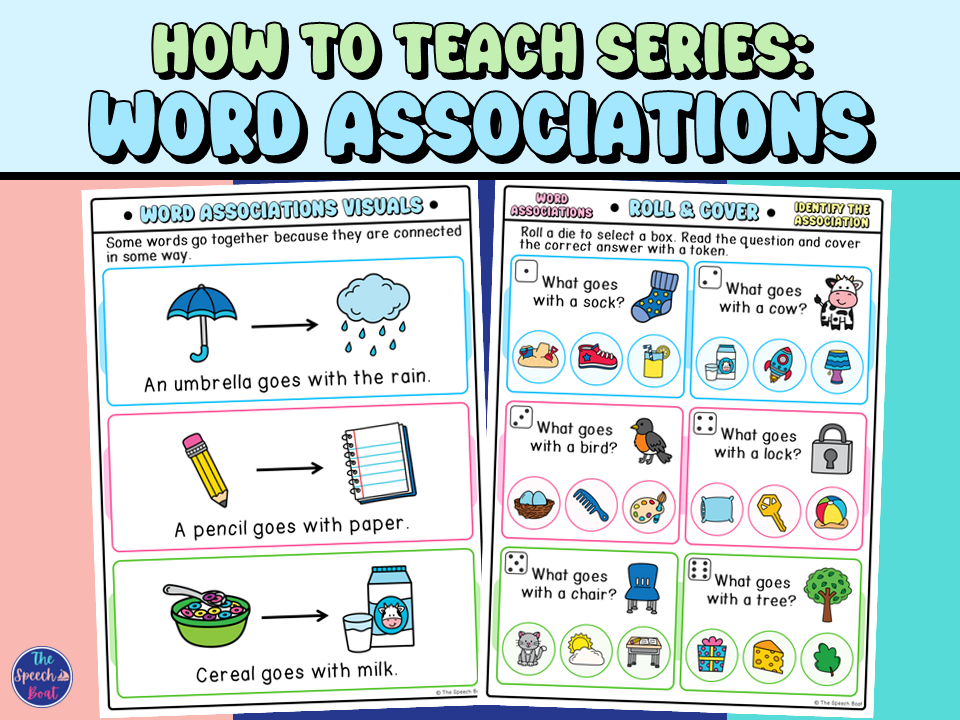
How To Teach Word Associations in Speech Therapy
Word associations are an important part of vocabulary development. They help build stronger connections between words children already know and make it easier to understand […]
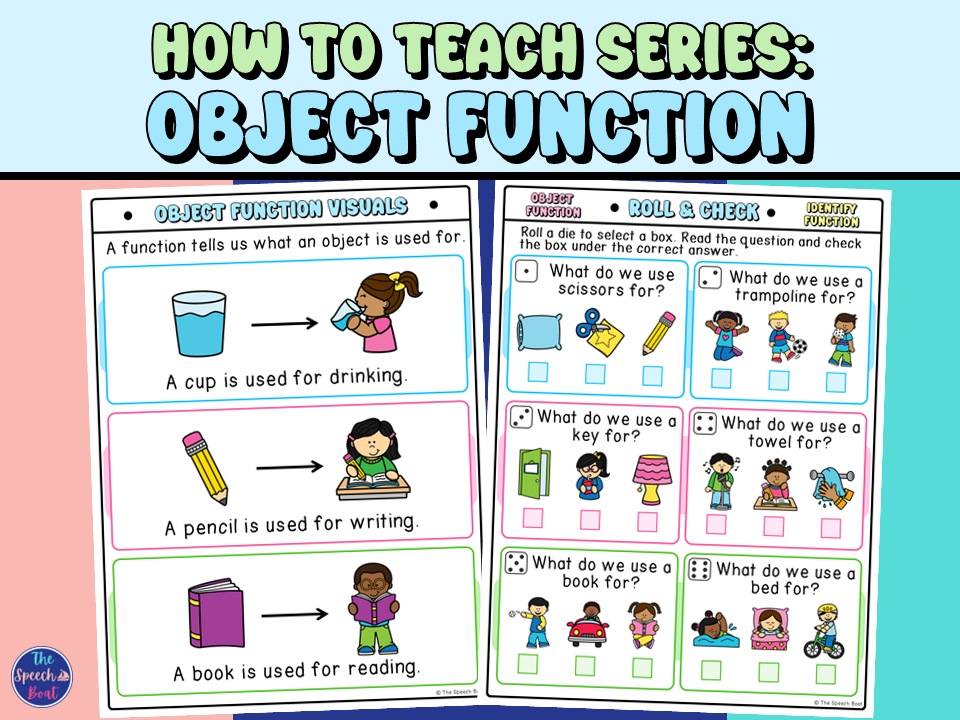
How To Teach Object Functions in Speech Therapy
Object functions are an important part of vocabulary development. When children learn a new word, they need to understand what it does and how it’s […]